


1. Over-Specified Lighting Design: Hidden Cost and Energy Waste in Project Front-End Design
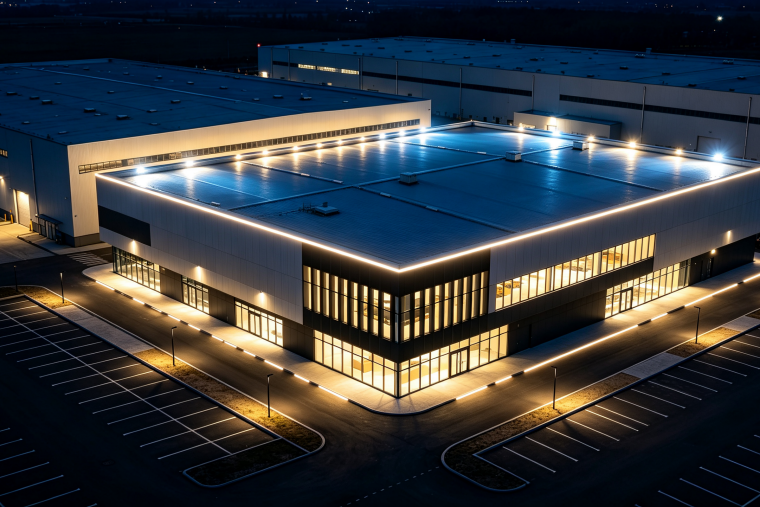
In the design process of modern commercial buildings, retail spaces and industrial plants, many lighting designers tend to pursue extreme parameter indicators in the pursuit of perfect rendering effects. They blindly raise the overall lux level of the space, superimpose excess lighting fixtures, and adopt high-power lamp configurations far exceeding the actual functional needs of the site. This industry habit of “over-design to avoid risks” has become the primary invisible pitfall leading to high project cost and long-term energy consumption losses.
From the perspective of project short-term costs, excessive illumination design means a substantial increase in the number of luminaires, supporting wires, circuits and installation labor. For large-scale industrial parks and chain commercial projects with huge construction areas, redundant lighting configuration will directly push up procurement costs and construction costs, resulting in unnecessary waste of project budgets. From the perspective of long-term operation, over-specified lighting will keep the space in a high-brightness and high-power consumption state for a long time. Excessive light irradiance cannot bring better spatial experience, but will cause serious light energy waste, greatly increase the daily power consumption and later operation and maintenance costs of shopping malls, offices and industrial workshops.
More importantly, unreasonable over-specification design will lay hidden dangers for subsequent intelligent lighting control. When the overall brightness of the space is excessively high, even if the later dimming system is deployed, it needs to run at a low power state for a long time to balance the brightness, which leads to reduced system operation efficiency and accelerated lamp light decay. This also makes the intelligent lighting system lose its due energy-saving value, forming a vicious cycle of “high investment, high energy consumption and low efficiency”.
2. Lighting Control Fragmentation: Multi-Brand Hardware Chaos Leading to Unstable Intelligent System Operation
While over-specification causes waste of hardware and energy costs in the early stage of the project, the disorderly selection of multi-brand luminaires in the construction stage further triggers the problem of lighting control fragmentation, which is another major systematic pain point in commercial and industrial lighting projects. In actual project landing, affected by budget division, phased construction and multi-party procurement, most projects will mix luminaires from multiple suppliers and brands.
Different brands of commercial and industrial luminaires often adopt inconsistent dimming protocols, driving systems and communication codes. The mixed use of multi-vendor hardware will lead to poor compatibility of the overall site lighting system. During the debugging and operation stage, common problems such as unresponsive dimming, partial lamp failure to control, asynchronous light switching and system stuttering frequently occur. Unlike single-space lighting effect defects, control fragmentation is a whole-site systematic problem, which cannot be solved by simply replacing individual lamps.
This problem will further amplify the loss caused by over-specification design. The originally over-configured high-brightness lamps cannot achieve precise graded dimming and intelligent zoning control due to system incompatibility. The redundant lighting equipment can only be kept in long-term power-on operation, which completely loses the energy-saving advantages of intelligent lighting. It not only delays the project acceptance cycle and increases subsequent debugging and rectification costs, but also seriously affects the intelligent management efficiency of modern commercial buildings and industrial parks.
3.Systematic Solutions: Integrated Design and Standardized Delivery to Solve Dual Pain Points
The two major problems of lighting over-specification and control fragmentation are essentially the disconnection between front-end design and back-end engineering delivery. To fundamentally solve these industry pain points, it is necessary to abandon the fragmented single-point processing mode and adopt a full-link systematic solution covering design optimization, product matching and system docking.
First, optimize the front-end lighting specification design. Combined with the actual functional scenarios of commercial and industrial spaces, formulate scientific and reasonable lux design standards, abandon blind over-design, and match the lamp power and quantity according to the actual use demand of the site. Through professional optical simulation, balance spatial lighting effect, functional demand and energy consumption control, avoid redundant hardware investment and long-term energy waste, and lay a foundation for stable and efficient intelligent control in the later stage.
Second, realize whole-site standardized product and system matching. For large-scale commercial chain projects and industrial park projects, lock unified product standards, driving protocols and control system specifications in the early stage of design and procurement. Adopt unified brand and unified standard lighting equipment for whole-site deployment, completely avoid compatibility problems caused by multi-brand hardware mixing, ensure synchronous dimming, stable operation and free zoning control of all luminaires.
As a UK-based premium architectural and industrial lighting brand, A&A Lighting focuses on global commercial and industrial project delivery. We provide customers with one-stop lighting solutions including scientific lighting specification optimization, customized luminaire matching and unified intelligent control system docking. While avoiding energy waste and cost loss caused by over-specification design, we ensure the unity, stability and intelligence of the whole-site lighting system, helping global projects achieve high-quality, low-consumption and long-term stable lighting operation.
Post time: Aug-19-2026